EV Charger Installation in Phoenix: What Homeowners Should Know Before Upgrading
If you're thinking about EV charger installation in Phoenix, you're not alone. More drivers across the Valley want a fast, reliable way to charge at home, and a Level 2 setup delivers the convenience most households expect.
Before you pick a unit, it helps to understand how a licensed electrician plans the job, where the charger should go, and what local conditions mean for long‑term performance. When you're ready to explore car charging stations for your home, here's what to know so your upgrade is smooth and safe.
Why Home EV Charging Beats Public Stations in Phoenix
Public charging can be helpful for trips, but it's often busy during events, weekend shopping, or after work. Summer heat can also slow some public chargers if hardware derates to protect itself. Home charging gives you a dependable routine, so you start each morning with range for the commute, school runs, and errands from Arcadia to Ahwatukee.
Having your own station also cuts downtime. Instead of waiting in line, you plug in at night and let the car top off while you sleep. That predictability is a real stress‑saver during monsoon season when storms sometimes affect power and traffic patterns.
How a Licensed Electrician Plans a Level 2 Charger Install
A Level 2 charger needs a dedicated 240‑volt circuit, the correct wire size, and a properly sized breaker. Your electrician will evaluate your panel's available capacity, the distance to the charger location, and your vehicle's onboard charging limits. They'll also consider how you park, the garage layout, and whether a wall mount or pedestal makes more sense.
Typical steps a pro handles include permitting guidance, a load calculation, selecting the best amperage for the circuit, and coordinating any inspection. The goal is a clean, code‑compliant install that charges quickly without nuisance trips or hot equipment.
Panel Capacity and Dedicated Circuit Basics
Your electrical panel is the heart of the project. Newer homes may have room for a dedicated two‑pole breaker, while older homes sometimes need an upgrade or subpanel to support charging. A pro checks the main service size, existing large loads like HVAC and ranges, and how much headroom you have at peak times.
- Load calculation helps decide the safe circuit size for your charger.
- Wire gauge and breaker size must match the charger's continuous load requirements.
- Some vehicles allow lower current settings that can fit existing capacity until you choose to upgrade later.
Never share this circuit with other appliances; dedicated means the charger is the only load on that breaker for safety and performance.
Charger Location, Hardware, and Cable Management
Where the charger lives affects daily use. Many Phoenix garages have the panel on an exterior wall, which can shorten the wire run. Others in neighborhoods like Desert Ridge or North Phoenix might need a longer path through attic spaces or finished walls. Your electrician will map a route that's safe, discreet, and serviceable.
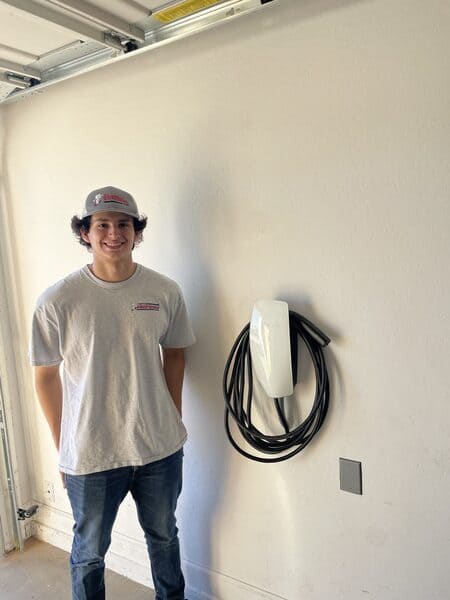
Think about the cable reach with both nose‑in and back‑in parking. Wall connectors and universal J1772 units vary in cord length, so choose one that lets you connect without strain. If you prefer parking in shade or under a carport, ask about outdoor‑rated enclosures and the best mounting surface.
Weather, Heat, and Safety Considerations In The Valley
Phoenix heat is real. High garage temperatures can reduce charging speed and stress components if the equipment runs hot. A professional installer will position the charger for airflow, avoid heat sources, and follow the manufacturer's clearances. They may recommend a shaded spot or an interior wall that sees less afternoon sun.
Monsoon season brings lightning and power fluctuations. Whole‑home surge protection and tight terminations give your system an extra layer of defense. Avoid placing the charger where water can pool or where the summer sun beats on the unit for hours. Small choices now help your station last longer.
Smart Charging, Time‑Of‑Use Schedules, and Range Routines
Most modern chargers and vehicles let you schedule charging. Many Phoenix‑area homeowners set a start time late at night to take advantage of typical off‑peak periods and cooler temperatures. If your daily driving is light, a lower current setting may be enough to refill overnight while being gentle on the circuit.
Smart features can also track energy use, lock access, and update firmware. If you plan to add solar later, mention that early so your electrician considers panel space and any future energy management you might want.
Future‑Proofing: Connectors, Amperage, and Upgrades
The EV world changes fast. Many brands now use or support multiple connector types through adapters. Choosing a charger with flexible settings can help if you switch vehicles. If your car accepts 40 amps today, a circuit sized for more could be helpful later, as long as the rest of your system supports it.
Tesla owners often prefer a branded wall connector for seamless features, while others choose universal units for mixed‑brand households. A level 2 charger electrician can explain how your vehicle's onboard charger limits real‑world speed, so you're not overspending on capacity you won't use.
What To Expect On Installation Day
After plans are set, your installer protects floors, confirms the route, shuts off power as needed, and completes the wiring and mounting. They'll label the breaker, verify ground‑fault protection if required by the equipment, and test charging with your vehicle. You'll see how to start and stop sessions, set schedules, and check indicators. Most jobs wrap up the same day when the panel is close to the garage, while longer runs or panel work add time.
- Clear the wall where the charger will mount and the path between the panel and the parking spot.
- Have your vehicle and mobile app ready so you can test scheduling before the tech leaves.
Local Factors Phoenix Homeowners Often Ask About
Neighborhood layouts vary. In places with block construction or vaulted ceilings, routing can take extra planning. Townhomes and HOAs may have guidelines about visible conduit or exterior boxes. If you regularly visit downtown events or ballgames, home charging helps you avoid late‑night public charging stops when stations are busiest.
If you're unsure about your home's readiness, start with a panel evaluation. Our local electricians will check capacity, talk through your driving routine, and recommend a plan that fits your home and your vehicle.
Safety First: Why This Isn't A DIY Project
It's tempting to treat a charger like any other appliance, but the continuous load and higher current deserve respect. Connections must be tight, wire size must match the breaker, and grounding and bonding must be correct. Improper work can lead to tripped breakers, overheated cables, or damaged equipment.
Hire a licensed, insured electrician who stands behind the work and understands local permitting and inspection processes. You'll get a safer install and fewer headaches down the road.
Choosing The Right Partner For EV Charger Installation
Look for a team that handles evaluation, installation, and support, not just the initial hookup. Ask about experience with your vehicle brand, clean routing options, and how they plan for future expansion, like solar or battery storage. A good installer will explain options in plain language and give you a clear next step.
Getting EV charger installation in Phoenix should feel simple and confident. With Phoenix Electricians Today, you get friendly guidance, careful planning, and a safe setup that fits your home and your routine. Let's make daily charging the easiest part of your drive. Call 623-209-5244 to schedule your evaluation with Phoenix Electricians Today.